by Lauren Acklin
Share
Share

Every fall repair window is set by the thermometer, not the calendar. By the time the weather tells you it is time, the work you needed done is already out of season.
Most facility teams schedule their fall inspection in the fall. It feels logical. It is also the single most common reason repairs get pushed into the following spring, run at emergency rates, or get patched instead of fixed.
The materials that seal your building do not read the calendar. Adhesives, sealants, coatings and hot-applied asphalt all have minimum application temperatures. Once overnight lows settle below them, a repair that was routine in September becomes either impossible or temporary. The inspection has to come early enough that findings still have somewhere to go.
The thermometer sets the deadline
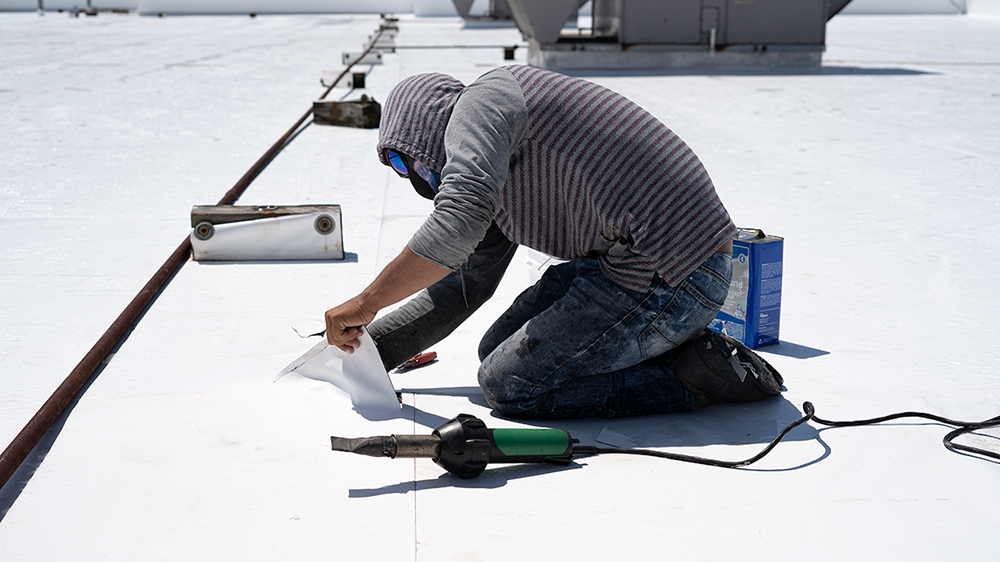
Work backward from the first hard freeze in your region, not forward from Labor Day. A membrane repair needs dry, above-threshold conditions to bond. Crack sealing needs pavement warm enough to accept material. Sheet metal and flashing work needs a contractor with open crew time, and that availability disappears as soon as the first cold front moves through and every owner in the market calls at once.
A realistic sequence from inspection to completed repair runs six to ten weeks: walk the site, document conditions, scope the work, collect and level bids, route the approval, and schedule the crew. If you want that work finished before the weather closes, the walk happens in late summer.
An inspection that arrives after the repair window has closed is not an inspection. It is a list of things you will worry about all winter.
What to look at, and why it matters now
Three systems carry most of the winter risk on a commercial property. They are also the three where early findings pay for themselves.
Roofing
Drains, seams, ponding water. Clogged drains and low spots turn the first freeze into concentrated load and the first thaw into an interior leak.
- Clear drains, scuppers and gutters; confirm they still flow
- Probe seams, laps and terminations for open or lifting edges
- Map ponding areas 48 hours after rainfall
- Check pitch pans, curbs and rooftop equipment penetrations
Paving
Cracks a quarter-inch or wider. Water in an open crack freezes, expands and widens it. One winter converts a sealing job into a patching job.
- Seal cracks at a quarter-inch or wider before they take on water
- Note alligatored areas and failing base, which need full-depth repair
- Verify drainage, catch basins and low spots that hold standing water
- Check curbs, ADA routes and striping ahead of plow season
Building envelope
Roof-to-wall transitions. The joints where two systems meet are where most water gets in, and they are the easiest thing to skip on a walk.
- Inspect roof-to-wall flashing, counterflashing and reglets
- Check sealant joints at windows, doors, panels and control joints
- Look for masonry cracking, spalling and open mortar
- Confirm weep holes, thresholds and grade drainage stay clear
What waiting actually costs
The cost of a late inspection is rarely the inspection. It is everything that follows: emergency mobilization instead of scheduled work, temporary patches billed twice because they have to be redone in spring, interior damage to finishes and tenant space, and capital plans built on last year’s assumptions because nobody documented current condition in time for the budget cycle.
Early inspection also gives you leverage. When you are the owner asking for a bid in August, you get competitive pricing and a crew date. In November, you get whatever is available.
A workable timeline
Late summer Walk every asset. Photograph and document conditions across roofing, paving and envelope.
Early fall Scope and prioritize. Separate life-safety and water-intrusion items from deferrable work.
Mid fall Bid, approve and schedule crews while temperatures still allow permanent repairs.
Before first freeze Close out the critical list. Roll the rest into next year’s capital plan with documentation behind it.
How PRS approaches it
PRS Nationwide Consulting Services inspects roofing, paving and building envelope as one assessment rather than three separate vendor visits, because the failures interact. We document current condition, prioritize by risk and cost, and hand you a scope you can bid and budget against.
Across a portfolio, that becomes one consistent standard for every site, one report format, and one point of accountability. As part of Connect Service Solutions, the repair work that follows can be routed to the right national trade partner without adding another procurement cycle.
Schedule your fall inspection
prsconsultingusa.com · 877-942-5613